
Research Allowance in Practice – Our Success Stories
Real results from our consulting practice: How we helped companies secure significant R&D tax credits.

- •NOVARIS has supported over 25 projects with a total funding volume of €18.85M.
- •Cross-industry success: Chemical technology (€1.2M), Mechanical engineering (€1.4M), Engineering (€620K).
- •100% success rate (as of March 2026, all submitted projects) for BSFZ certification.
- •Average processing time from initial consultation to payout: 3.5 months.
Real Results, Real Companies
Three case studies that show what the path to the Research Allowance looks like in practice.

Specialty Chemicals Manufacturer Secures EUR 1.2 M Research Allowance
Mid-size specialty chemicals manufacturer with approx. 180 employees in Southern Germany. The company had been developing novel catalytic processes and high-performance coatings for years but had never applied for the research allowance — they were unaware their work qualified.
Challenge: R&D activities were spread across multiple departments with no centralized documentation. There was no clear distinction between routine work and eligible research. Additionally, the retroactive application had to be coordinated across 5 fiscal years.
Solution: NOVARIS conducted a full-day workshop with all department heads, identified 6 eligible projects, and prepared the complete technical documentation. The BSFZ application was submitted within 3 weeks — certification was received after 8 weeks. The tax filing was prepared in coordination with the client's tax advisor.

Machine Manufacturer Receives EUR 1.4 M for Innovative Production Lines
Mechanical engineering company with 240 employees in NRW, including 24 engineers in the R&D department. The company was developing innovative production lines with sensor fusion and AI-powered quality control but had no knowledge of the research allowance.
Challenge: R&D projects spanned both hardware development (sensors, robotics) and software (AI algorithms, image processing). Correctly allocating personnel costs was complex, as many engineers switched between routine work and research. As an SME with 240 employees, the company also qualified for the enhanced funding rate.
Solution: NOVARIS implemented structured time tracking for all R&D staff, documented 4 projects with clear technical boundaries, and secured the full SME bonus of 35%. The entire process — from initial consultation to tax credit — took 5 months. An additional EUR 280,000 was gained through the SME surcharge.
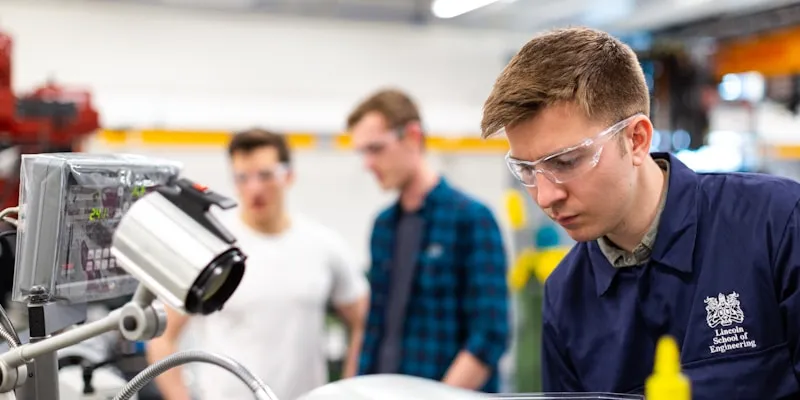
Engineering Firm Secures EUR 620,000 Through Structured Application
Specialized engineering firm with 65 employees in Bavaria. The company developed novel testing methods for additively manufactured components (3D printing) in collaboration with a technical university.
Challenge: Part of the research was outsourced as contract research to a university — correct tax treatment and documentation of contract research under §2(4) FZulG was critical. Additionally, the managing director's own contributions had to be properly valued and claimed.
Solution: NOVARIS restructured the contract research agreements to be FZulG-compliant, documented the owner's contributions per BMF guidelines, and applied for the full SME rate of 35%. The client's time investment was only about 5 hours — NOVARIS handled all technical documentation. Result: EUR 620,000 in research allowance in just 4 months.
What Our Clients Say
“We had no idea our development work was eligible for funding. NOVARIS identified 6 projects in half a day and handled everything. The effort on our end was minimal.”
“The structured time tracking system NOVARIS introduced is something we now use permanently. It not only secured the research allowance but also improved our internal project management.”
“As a small engineering firm, we had neither the time nor the expertise for the BSFZ application. NOVARIS handled everything in just 5 hours of our time — the result: EUR 620,000.”
What Our Clients Have in Common
Four factors that make the difference between a successful and a failed application.
Thorough Project Analysis
More eligible projects identified than originally expected – often overlooked R&D activities are systematically captured.
Professional Documentation
Higher BSFZ success rate through precise technical descriptions with clear distinction from routine work.
Retroactive Application
Immediate liquidity benefits by utilizing the retroactive period from 2020 – up to 5 years retroactively.
Success-Based Fee
No risk for the company – our fee is only due when the research allowance is actually paid out.
The Stories Behind the Funding
Every project brings its own set of obstacles. Here we show the specific challenges our clients faced – and how we solved them together.
Specialty Chemicals: From Initial Doubt to Approval in 14 Weeks
When the managing director of the specialty chemicals manufacturer first contacted us, he was skeptical. The company employed 18 scientists and engineers who had been researching catalytic processes for years – exactly the type of experimental development that the FZulG supports.
The biggest challenge was drawing the line: where does routine production end, and where does research begin? We worked through every single development step together with the project managers. For one project developing a new catalyst for producing bio-based surfactants, the case was clear – there was technical uncertainty, systematic experimentation, and genuine novelty.
In the end, we identified six projects and filed retroactive applications covering five fiscal years. The BSFZ certificate arrived after eight weeks, and the payout from the tax office followed six weeks later. Total result: EUR 1.2 million, applied directly against the company's corporate tax liability.
Mechanical Engineering: 24 Engineers, Zero R&D Documentation – and Still EUR 1.4M
This mechanical engineering company from North Rhine-Westphalia had a typical problem: their development department with 24 engineers had been working on innovative manufacturing systems with integrated sensors and AI-based quality control for years. But nobody had ever documented this work as R&D. Their existing tax advisor simply had no experience with the FZulG.
We started with a full-day workshop with the development managers. It quickly became clear: four of the ongoing projects met all criteria for experimental development under the Frascati Manual.
The particular difficulty was in allocating personnel costs. Many engineers split their time between R&D work and series production. We introduced a system for precise time tracking and reconstructed the costs retroactively. Result: EUR 1.4 million in Research Allowance, including EUR 280,000 additional funding through the 35% SME bonus in effect since 2024.
Engineering Firm: Getting Contract Research Right and Securing the SME Rate
A specialized engineering firm in Bavaria with 65 employees was developing novel testing methods for 3D-printed components. Part of the research was conducted through a cooperation with a technical university – this made the application more complex, but also more rewarding. With contract research, up to 70 percent of external costs can be credited.
Management had neither the time nor the capacity to handle the application themselves. We took over the entire process: from the initial conversations with the project managers, through drafting the technical descriptions, to all communication with the BSFZ and the tax office.
As an SME with fewer than 250 employees, the firm qualified for the increased 35% funding rate. Combined with correctly credited contract research and three identified in-house projects, the total funding came to EUR 620,000. The entire process took four months.
Our Process in Practice
From first contact to payout, the typical timeline is three to five months. Here is what each stage looks like.
Free initial meeting to determine basic eligibility.
Workshop with your development managers. Identify eligible R&D components.
Draft technical project descriptions and submit application to the BSFZ.
BSFZ reviews and issues the certificate upon positive evaluation.
Tax office application and offset against tax or direct payout.
Funding Volume by Industry
The size of the Research Allowance depends heavily on the industry, company size, and scope of R&D activities. Here is an overview based on our consulting practice.
The ranges shown are based on our consulting practice and refer to companies with 50 to 500 employees. Actual funding amounts depend on individual R&D personnel costs and the number of eligible projects.
Sources & legal references
All statements regarding eligible base, funding rates, and application process are based exclusively on the following official legal sources and authority documents. Research date: .
- § 4 (3) FZulG (R&D Tax Credit Act)
- § 9 No. 7c GewStG (Trade tax exemption)
- § 169 AO (Assessment period)
- BMF letter on FZulG application 2024-11-11
- BSFZ certification body
- Wachstumschancengesetz (BGBl. I 2024 No. 108)
Note: This page does not replace individual tax advice. For a binding assessment of your project, please contact us or your tax advisor.
With NOVARIS: 100 % Approval Rate (as of March 2026)
NOVARIS Handles Your Complete R&D Tax Credit Application
From the initial assessment of your R&D projects through BSFZ certification to payout by the tax office – NOVARIS manages the entire process. Success-based and risk-free.
Book Your Free Consultation
Everything about the FZulG application – requirements, process, and 2026 updates.
Read Guide
Calculate your individual FZulG entitlement in just a few steps.
Open Calculator
Step by step through the BSFZ and tax office application.
Start Application