R&D Tax Credit for Agri &
FoodTech
Agriculture and food technology is one of the fastest-growing sectors. Companies researching precision farming, sustainable food production or innovative cultivation systems receive up to 25% of R&D personnel costs as a tax credit.
- •Agriculture and FoodTech companies receive up to 25% of R&D expenditure as a tax credit.
- •Eligible: Precision Farming, smart farming sensor technology, novel food processing, sustainable packaging.
- •Farmers as sole proprietors: own contributions eligible at €100/hour.
- •Systematic field trials with documented technical uncertainty are eligible.
Agriculture & FoodTech: Underestimated Funding Potential
Agriculture and food technology is frequently underestimated when it comes to the Research Allowance, yet the sector is highly innovative: Precision Farming, vertical agriculture, novel processing technologies and bioprocess optimization involve significant technical uncertainties – ideal prerequisites for FZulG funding.
Particularly interesting for the industry: food safety research (new preservation methods, contaminant analysis, shelf-life optimization) almost always meets BSFZ criteria but is rarely applied for. The development of new crop protection strategies, irrigation systems or harvesting robots is also eligible.
NOVARIS supports agriculture and food companies from initial assessment to payout. Average reimbursement: €60,000–€250,000 per year – significantly more for large enterprises with their own R&D departments.
What is funded in Agri &
FoodTech?
These project types are typically eligible under FZulG §2 – provided technical uncertainty existed and the goal was not achievable by standard methods.
Precision Farming & Agricultural Technology
Development of new sensor systems, AI-based decision support or autonomous agricultural machinery that revolutionize resource use and yields.
Food Technology & Novel Food
Development of new processing methods, alternative protein sources or innovative preservation technologies for more sustainable and healthier food.
Indoor Farming & Vertical Agriculture
Development of optimized growing systems, intelligent lighting control or new substrate concepts for resource-efficient indoor farming.
FZulG Criteria for
Agri & FoodTech Projects
The process, product or system goes beyond known cultivation, processing or sensor technologies.
Field trials, laboratory iterations and adaptation cycles document that success was not foreseeable.
Test plans, measurement logs, harvest and analysis data document the scientific approach.
Ongoing production and routine cultivation are not eligible – only the R&D phase counts.
Even field trials and pilot plants on agricultural land are eligible, provided they serve knowledge generation and not ongoing production.
Eligible are: Agronomists, Data Scientists, Food Technologists as well as contract research at universities and research institutes (70%).
Typical funding per Agri & FoodTech project: €30,000 – €120,000/year
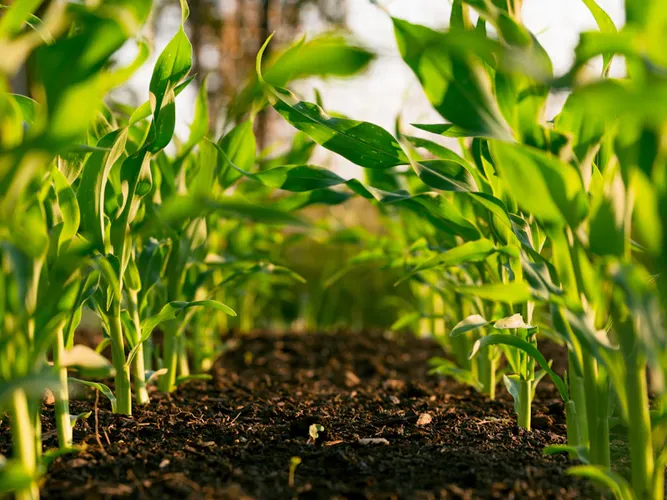
AI-based crop detection and autonomous field robots. NOVARIS demonstrated the technical novelty.
3+ projects managed, 100% approval rate.
Without vs. with NOVARIS — typical difference
Illustrative example based on average client results. Actual results may vary.
Industry-Specific Requirements in Agriculture & FoodTech
The agriculture and food industry is undergoing a technological revolution that offers significant funding potential for the Research Allowance. Precision farming systems combine sensors, data analysis and actuators in new ways: The development of multi-sensor platforms (NIR spectroscopy, hyperspectral cameras, soil sensors), GPS-RTK-guided application technology and AI-based yield prediction models generates eligible R&D costs. Adapting existing sensor technologies to specific field conditions (weather, soil vibrations, dust exposure) also constitutes experimental development.
Food processing innovations encompass a wide spectrum of eligible activities: high-pressure pasteurization (HPP), pulsed electric fields (PEF), UV-C treatment, extrusion texturing for plant-based proteins and innovative encapsulation technologies for flavors or active ingredients. Developing and optimizing these processes requires systematic test series on process parameters, shelf-life studies and sensory evaluations – classic R&D activity under the FZulG.
The development of agricultural sensor technology is particularly eligible. Soil moisture sensor networks, imaging techniques for plant disease detection, automatic weed recognition using computer vision and drone-based crop analysis require combining different technology domains. Integrating IoT platforms, edge computing for real-time field decisions and developing robust communication infrastructure (LoRaWAN, NB-IoT) for agricultural environments offer diverse R&D starting points.
The EU Novel Food Regulation (EU) 2015/2283 places special requirements on companies looking to bring novel foods or ingredients to market. The safety assessments required for approval – toxicological studies, allergenicity testing, nutrient analyses and bioavailability studies – are eligible R&D activities. The development of alternative protein sources (insect protein, mycoprotein, cell-based foods) and fermented foods with functional properties also offers significant funding potential. Our consultants understand the interfaces between food law and R&D funding.
Typical Funding Amounts in Agriculture & FoodTech
Calculation Example: AgTech Company for Precision Farming
- • 6 Engineers (sensors, software, mechanics) – gross salary: €480,000
- • R&D share sensor platform development (approx. 60%): €288,000
- • Contract research university (field trials): €100,000 (70% = €70,000)
- • Research Allowance (25%): €89,500 / year
Calculation Example: FoodTech Startup (Plant-Based Proteins)
- • 3 Food Technologists, 1 Process Engineer (gross salary: €320,000)
- • R&D share extrusion technology (approx. 70%): €224,000
- • Annual Research Allowance: 56.000 €
Eligible Agriculture & FoodTech Projects
Frequently Asked Questions
Further Resources on the R&D Tax Credit
Deepen your knowledge with our specialized resources:



Precision Agriculture & Smart Farming
The digitalization of agriculture and food production opens entirely new funding opportunities through the Forschungszulage.
Sensor Technology & Soil Data
Developing novel soil sensors for real-time measurement of nutrient content, moisture, and pH levels. Integrating heterogeneous sensor data into a unified decision-making basis represents a significant technical challenge with funding potential.
Drones & Remote Sensing
Research on autonomous drone swarm systems for crop protection application, multispectral image analysis for early detection of plant diseases, and algorithms for automated stock counting in animal husbandry.
AI-Driven Crop Management
Developing machine learning models for site-specific fertilization recommendations, yield forecasting, and automated irrigation control. Combining weather data, satellite imagery, and historical yield data generates complex R&D challenges.
Food Safety Innovation
Developing novel rapid testing procedures for contaminants, blockchain-based traceability systems, and AI-driven quality control in food production. EU Regulation 2021/382 tightens requirements for allergen management and HACCP systems.
Growth area: The global precision agriculture market is projected to exceed $15 billion by 2027 (MarketsandMarkets). German AgriTech companies are at the forefront of this development – and the Forschungszulage supports their R&D investments in a technology-neutral, low-bureaucracy manner.