
Aerospace · FZulG-eligible

R&D Tax Credit for Aero
space

Aerospace is one of the most technologically demanding industries worldwide. Companies researching new propulsion systems, lightweight structures or avionics can reclaim up to 25% of R&D personnel costs as a tax credit.

Tax credit up to 25% OEM & Tier suppliers eligible Retroactive to 2020
At a Glance
  • Aerospace companies can reclaim up to 25% of R&D expenditures as a tax credit.
  • Eligible: engine development, new composite materials, avionics, satellite technology, additive manufacturing.
  • For university collaborations: assessment base up to €15 million (up to €3.75 million reimbursement).
  • International consortia (e.g. ESA): the German company's own R&D contributions are eligible.

Aerospace: Maximum R&D Intensity

The aerospace industry, with an R&D intensity of over 11% of revenue (BDLI, 2024), is among the most research-intensive sectors. At the same time, it is subject to the strictest certification requirements (DO-178C, DO-254, EASA Part 21) -- each of these requirements creates technical uncertainties that are eligible under the FZulG.

A particular advantage: Military and dual-use research is also eligible, provided the projects meet the Frascati criteria. The BSFZ evaluates the research character, not the application. Projects within ESA or EU framework programs can also claim the R&D tax credit in addition.

Typical reimbursement volumes are €300,000--€1,200,000 per year -- especially for suppliers with specialized development teams for avionics, engine technology or satellite components.

Related Industries: Mechanical Engineering (Precision Manufacturing) · Software & IT (Avionics Software)
Eligible Projects

What is funded in
Aerospace?

These project types are typically eligible under FZulG §2 -- provided technical uncertainty existed and the goal was not achievable with existing methods.

Typically eligible

Propulsion Systems & Engines

Development of new engine concepts, hybrid drives or electric propulsion systems for aerospace applications with superior thrust-to-weight ratio or emission characteristics.

Hybrid-electric propulsion architectures
New combustion chamber concepts & cooling systems
Ion thrusters & electric spacecraft propulsion
Typically eligible

Lightweight Construction & Structural Mechanics

Development of novel lightweight structures, fibre composite concepts or additively manufactured structural components for aerospace fuselages, wings or housings.

CFRP fuselage and wing structures
Additive manufacturing of certified structural parts
Thermal protection shields for re-entry vehicles
Typically eligible

Avionics & Flight Control Systems

Development of novel avionics systems, flight control algorithms or navigation solutions enabling new levels of autonomy or safety in aviation.

New fly-by-wire control architectures
GNSS/INS sensor fusion for resilient navigation
Autonomous flight control for UAV/UAS systems
When does your project qualify?

FZulG Criteria for
Aerospace Projects

TRL 1--6 as Guidance

Activities at TRL 1 to approx. 6 (technology demonstration) are typically eligible; from TRL 7+ serial development predominates.

Technical Uncertainty

Test stand trials, wind tunnel test iterations and simulation cycles document the technical uncertainty.

Knowledge Generation

The project generates new knowledge that goes beyond existing certification and qualification requirements.

Separation from Certification

Pure DO-178C/DO-254 compliance activities are not eligible; the preceding development phase is.

Important to Know

Dual-use technologies (civil and military application) are generally eligible under the FZulG provided they are deployed in the civil sector. Clear documentation of the civil use case is required.

Eligible roles: aerospace engineers, fluid dynamicists, avionics developers and contract research at DLR or universities (70%).

Typical funding per aerospace project: €500,000 -- €5,000,000/year

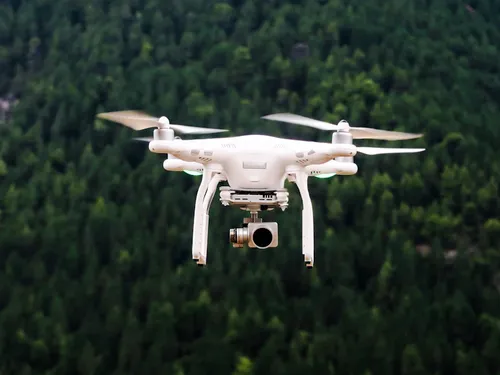
Aerospace technology -- engine and avionics research

“The BSFZ was skeptical about our drone project. NOVARIS convincingly presented the research component -- €120,000 approved.”

Drone Startup, Dresden
BSFZ · 2025
Aerospace · Materials Research Funded

Development of novel lightweight materials. NOVARIS documented the experimental uncertainty in material properties.

€ 350,000/ year secured
Overall Track Record · Aerospace

4+ projects managed, 100% approval rate.

€ 1.4Mtotal secured

Without vs. with NOVARIS -- Typical Difference

Identified R&D Portions
Without NOVARIS
30%
With NOVARIS
70%
Annual R&D Tax Credit
Without NOVARIS
€55K
With NOVARIS
€110K
BSFZ Approval Rate
Without NOVARIS
~62%
With NOVARIS
100%

Illustrative example based on average client results. Actual results may vary.

PDF
Free Industry Guide

R&D Tax Credit for Aerospace

Learn which R&D activities in your industry are eligible -- with practical examples and calculations. Download as a free PDF now.

Industry-Specific

Industry-Specific Requirements in Aerospace

The aerospace industry is subject to the strictest development standards of any sector -- and consequently generates particularly extensive R&D documentation. DO-178C (Software) and DO-254 (Hardware) require a rigorous development and verification framework with demonstrable test coverage levels. The development artifacts required -- Software Requirements Specifications (SRS), Design Description Documents (SDD), Verification and Validation Reports, Structural Coverage Analyses and Traceability Matrices -- are largely usable as R&D evidence for the BSFZ. Particularly at Certification Levels A and B (DAL A/B), the R&D effort is enormous.

Flight testing and qualification tests are prime examples of experimental development. Flight tests for expanding the operational envelope (Flight Envelope Expansion), flutter tests, structural load tests per CS-25 Subpart C and engine certification tests per CS-E generate systematic test data under controlled conditions with inherent technical uncertainty. Ground tests such as fatigue testing, bird strike simulations and lightning strike qualifications are also eligible.

The development and qualification of fibre composite materials (CFRP, GFRP) for primary structures is a particularly eligible area. Material property determination (A-basis, B-basis values), process development for autoclave and out-of-autoclave methods, impact damage tolerance studies (BVID, VID) and the development of novel repair procedures require extensive test series. Material qualification according to NADCAP standards generates comprehensive test documentation that directly serves as R&D evidence.

EASA certification (European Union Aviation Safety Agency) is a multi-layered process containing significant R&D components. Whether Type Certificate (TC), Supplemental Type Certificate (STC) or European Technical Standard Order (ETSO) -- demonstrating compliance with Certification Specifications requires innovative analysis methods, test stand development and validation concepts. Our aerospace consultants understand the interfaces between certification processes and R&D and systematically maximize the eligible assessment base.

Typical Funding Amounts in Aerospace

Calculation Example: Avionics Supplier with DO-178C Development

  • • 10 software engineers DAL-A certification (gross salary: €950,000)
  • • R&D portion (approx. 65%): €617,500
  • • Contract research test laboratory: €150,000 (70% = €105,000)
  • • R&D tax credit (25%): €180,625 / year

Calculation Example: Composite Structure Developer

  • • 6 materials scientists and test engineers (gross salary: €510,000)
  • • R&D portion material qualification (approx. 70%): €357,000
  • • Annual R&D tax credit: €89,250
Project Examples in Detail

Typical Eligible Aerospace Projects
Lightweight composite structures
1

Lightweight Composite Structures

Developing innovative lightweight composite structures is one of the classic eligible subjects in the aerospace industry. Research on carbon fiber reinforced plastics (CFRP), thermoplastic composites, and hybrid materials aims to reduce structural weight while maintaining or improving strength. Technical uncertainty is evident in developing new manufacturing processes such as Automated Fiber Placement (AFP), Resin Transfer Molding (RTM), or the use of nanoparticles to reinforce matrix materials. Qualifying new materials to EASA certification standards (CS-25, CS-23) requires extensive test programs -- fatigue testing, damage tolerance analysis, and environmental simulation -- whose experimental nature qualifies them for the research allowance. Developing repair procedures for composite structures in the field is another eligible area.

Satellite Communication Systems

Developing novel satellite communication systems offers significant funding potential under the research allowance. This includes researching more powerful antenna systems for LEO and GEO constellations, developing phased-array antennas with electronic beam steering, designing new modulation schemes for higher data rates, and creating interference-resistant communication protocols. Integrating quantum key distribution (QKD) into satellite communications represents a particularly innovative research field. Miniaturizing communication payloads for CubeSats and small satellites, developing inter-satellite laser links, and researching new frequency bands (V-band, W-band) for broadband satellite services are all eligible R&D activities, provided they advance beyond the current state of the art.

Satellite communication systems
2
Sustainable aviation fuel (SAF) research
3

Sustainable Aviation Fuel (SAF) Research

Sustainable Aviation Fuels (SAF) are a key topic in the aviation industry, offering numerous eligible research approaches. Developing new synthesis routes -- such as Fischer-Tropsch processes from biomass, Alcohol-to-Jet processes, or Power-to-Liquid technologies based on green hydrogen -- regularly qualifies for the research allowance. Also eligible is researching SAF blend compatibility with existing engine technologies, analyzing combustion characteristics and emission profiles, and developing quality assurance methods for novel fuel compositions. Companies working on scaling SAF production processes from laboratory to pilot plant scale can claim the associated personnel costs as eligible R&D. Documenting technical uncertainties in catalyst development and process optimization is crucial.

Autonomous Navigation for UAVs and Drones

Developing autonomous navigation systems for unmanned aerial vehicles (UAVs) is a growing area of eligible R&D. This includes researching sense-and-avoid algorithms, developing GPS-independent navigation systems using visual odometry or SLAM technology (Simultaneous Localization and Mapping), designing swarm control algorithms for multi-UAV operations, and creating fail-safe mechanisms for operations over populated areas. Particularly eligible are projects developing new approaches for integration into regulated airspace (U-Space) -- such as dynamic geofencing systems, automated flight planning software, or cooperative conflict resolution algorithms. Technical uncertainty lies in whether the developed systems achieve the required reliability and redundancy to enable certification under EASA regulations for BVLOS (Beyond Visual Line of Sight) operations.

Autonomous navigation for UAVs and drones
4
FAQ

Frequently Asked Questions

Dual-use technologies are not fundamentally excluded. The FZulG supports R&D regardless of the later field of application, provided a civil use case exists. For mixed-use projects, clear documentation of the civil component is recommended. Purely military R&D with no civil application perspective is excluded from funding.
A combination is possible provided no double-funding of the same personnel costs occurs. ESA contracts typically reimburse personnel costs directly -- these costs cannot additionally be claimed as FZulG assessment base. Costs not covered by ESA funds, as well as own contributions beyond the ESA project, can however be eligible.
Pure compliance evidence for certification purposes is not eligible. However, the preceding development and verification phase, where new technical solutions are developed, is clearly eligible. NOVARIS cleanly separates the R&D portion from the certification work, maximising the eligible assessment base.
AEROSPACE-SPECIFIC

Specific Requirements in Aerospace

EASA regulation, extreme operating conditions, and the highest safety requirements make aerospace one of the most R&D-intensive industries – with corresponding funding potential.

EASA Certification & DO-178C

Developing EASA-compliant software under DO-178C (Airborne Software) and qualifying new materials under EASA Part 21 constitute eligible R&D activities. The verification and validation of novel systems under aviation safety standards is inherently technically uncertain.

Lightweight Materials & Composites

Research on novel CFRP manufacturing processes (Automated Fiber Placement), thermoplastic composites, and ceramic matrix composites (CMC) for turbine blades. Weight reduction while increasing operating temperature is a classic R&D challenge with funding potential.

Propulsion Systems & SAF

Development of electric and hybrid-electric propulsion, hydrogen fuel cell systems for aviation, and research on Sustainable Aviation Fuels (SAF). The EU initiative ReFuelEU Aviation requires SAF blending quotas from 2025 – manufacturers' development work is frequently eligible for funding.

Satellite Technology & New Space

Miniaturized satellite systems (SmallSats), new communication protocols for LEO constellations, and radiation-hardened electronics development. Germany's growing NewSpace sector increasingly uses the Forschungszulage as a technology-neutral funding instrument.

Industry benchmark: The German aerospace industry employs over 117,000 people and invests approximately €5.5 billion annually in R&D (BDLI, 2024). With an R&D intensity of over 12%, the sector is one of the most research-intensive in Germany.

Why Self-Filed Applications Fail

The R&D tax credit application process is technically complex and full of pitfalls. BSFZ rejections, incorrect cost allocations and missed deadlines cost German companies millions in unclaimed funding every year.

~29 %
3–6 months
€50,000+
€ 15 Mio.+secured
25+clients
100 %approval rate
6 JahreFZulG experience

With NOVARIS: 100 % approval rate (as of March 2026)

NOVARIS handles your complete FZulG application

From the initial analysis of your R&D projects through the BSFZ certification to the payout by the tax office – NOVARIS manages the entire process. Success-based and risk-free.

Schedule a Free Consultation
Max Nodes
Max Nodes
Managing Director & Founder of NOVARIS Consulting. Specialized in R&D tax credits (FZulG) with a 100% approval rate. Learn more