
R&D Tax Credit for Energy &
Cleantech
The energy transition is Europe's largest R&D programme. Companies developing new solar, battery, hydrogen or smart grid technologies can reclaim up to 25% of their R&D costs via the FZulG.
Check eligibility- •Energy companies can reclaim up to 25% of R&D expenditure as a tax credit.
- •Eligible: renewable energy, hydrogen technology, battery storage, smart grid, energy efficiency.
- •The R&D tax credit is stackable with ZIM, BMWK programmes and EU funding.
- •Cooperations with Fraunhofer/universities: own contributions 100% claimable.
The Energy Transition as Innovation Driver
The energy transition has massively accelerated R&D activities in the energy sector: whether hydrogen technology, battery storage, smart grids or power-to-X processes – the technical uncertainties in scaling new energy technologies make virtually every development project eligible under the FZulG.
Particularly relevant: The combination of the R&D tax credit with other funding programmes (BAFA, KfW, 7th Energy Research Programme) is explicitly permitted, as long as total funding does not exceed eligible expenditure. NOVARIS helps with optimal funding combinations and avoids double-funding issues.
Typical projects in the energy sector: development of new inverter topologies, optimisation of electrolyser stacks, intelligent load management algorithms. Average reimbursement: €180,000–600,000 per year.
What is funded in
Energy & Cleantech?
These technology fields are eligible under FZulG § 2 – provided technical uncertainty existed and the solution was not assembled from known components.
Renewable Energy Systems
Development of new photovoltaic cell concepts, wind turbine aerodynamics, heat pump cycles or geothermal technologies with unknown efficiency at the start of the project.
Energy Storage Technologies
Development of new battery cell chemistries, solid-state batteries, redox flow systems, hydrogen storage or large-scale thermal storage with unknown performance parameters.
Smart Grid & Grid Control
Development of new algorithms for predictive load management, digital grid control or aggregator platforms that optimally integrate distributed generators.
Cleantech Projects and
the FZulG
The technology goes beyond known approaches – not merely assembling standard components.
The efficiency, service life or system stability was unknown at the outset.
Experiments, measurement series, simulations and iterations were conducted and recorded in a structured manner.
The company bears the cost risk of the R&D – not the client or funding body alone.
The FZulG and other funding programmes (BAFA, NIP, National Hydrogen Programme) are stackable – however with a total funding ceiling. NOVARIS coordinates the optimal combination.
Small companies and start-ups receive an increased funding rate of 25% on up to €4M assessment basis per year.
Typical funding per Cleantech project: €50,000 – 200,000/year
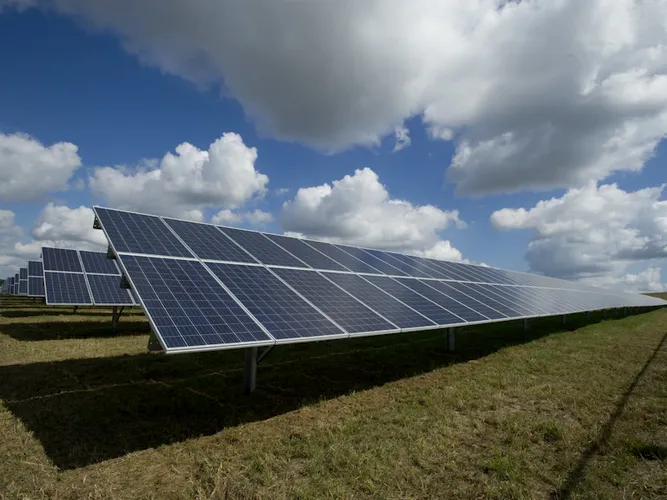
Research on novel storage technologies. NOVARIS documented the technical uncertainty and secured the funding.
7+ projects managed, 100% approval rate.
Without vs. with NOVARIS — typical difference
Illustrative example based on average client results. Actual results may vary.
Industry-Specific Requirements for Energy & Cleantech
The energy transition is driving one of the most extensive technological transformations of our time – generating enormous potential for the R&D tax credit. Grid integration and smart grid research are among the most classic R&D topics in the sector. The increasing feed-in of volatile renewable energy sources requires novel control algorithms that ensure grid stability in real time – while the share of rotating masses in the system simultaneously decreases. Development work on predictive grid management systems that link weather data, consumption forecasts and storage availability into feed-in schedules typically meets all BSFZ criteria for experimental development. Research on decentralised energy management systems (DEMS), virtual power plants and blockchain-based peer-to-peer energy trading platforms is also eligible under the FZulG, provided technical uncertainties are documented – for example when scaling to millions of prosumer endpoints, with latency requirements below 100 ms for primary frequency response, or when integrating heterogeneous communication protocols (IEC 61850, OCPP, Modbus TCP) into a unified control system. NOVARIS supports energy suppliers and grid operators in structuring these R&D projects so that their experimental character is clearly demonstrable to the BSFZ.
Energy storage technologies represent one of the most promising funding areas in the energy sector. The development of advanced battery storage – from lithium iron phosphate (LFP) to sodium-ion cells to next-generation solid-state batteries – involves significant experimental components: materials research on cathode materials, electrolyte optimisation, cell design for improved energy density and cycle life, and the development of intelligent battery management systems (BMS) with AI-supported state estimation (SOC/SOH) and degradation prediction. In hydrogen, electrolyser development (PEM, AEL, SOEC), fuel cell system integration, pressure storage concepts and hydrogen logistics solutions are typical R&D projects. Thermal storage systems – latent heat storage, thermochemical storage, high-temperature solid-state storage – likewise require systematic research on storage materials, heat transfer concepts and system integration. Crucial for eligibility: scaling from laboratory prototypes to industrial scale (e.g. from a 10 kWh lab cell to a 1 MWh storage system) qualifies as experimental development, provided technical uncertainties must be overcome – for example regarding thermal management, safety concepts or degradation behaviour under real operating conditions.
The development of innovative power electronics based on SiC and GaN generates particularly high eligible R&D costs in the energy sector. Wide-bandgap semiconductors such as silicon carbide (SiC) and gallium nitride (GaN) enable inverters, rectifiers and DC/DC converters with significantly higher efficiencies, lower switching losses and more compact form factors – but require fundamentally new circuit concepts, gate driver designs, thermal layouts and EMC strategies. Validating these power electronics under real grid conditions – grid fault ride-through per VDE-AR-N 4120, anti-islanding detection, harmonic compensation per EN 61000-3-12 and reactive power provision – constitutes experimental development under the FZulG. The development of multi-level converter topologies for medium-voltage applications, bidirectional charging stations (V2G) and solid-state transformers also falls within the eligible research fields. Our consultants with an electrical engineering background identify on average 40–55% more eligible R&D components in typical power electronics portfolios than non-specialist generalists.
Certification and standards testing according to IEC standards is frequently underestimated in the context of the R&D tax credit. Yet IEC certification processes – IEC 61215 and IEC 61730 for PV modules, IEC 61400 for wind turbines, IEC 62109 for inverters, IEC 62619 for stationary battery storage – generate systematic test protocols, experimental results and measurement data that serve as robust R&D evidence. When technical problems arise during certification that require iterative design adjustments (e.g. failure in the damp heat freeze test, insufficient PID resistance, EMC limit exceedances), this constitutes experimental development. NOVARIS helps document these iteration loops cleanly and prepare the knowledge gained for the BSFZ application. Furthermore, the optimisation of renewable energy systems – from aerodynamic rotor blade development for wind turbines to research on perovskite tandem solar cells to efficiency improvements in biomass gasification plants – encompasses a broad field of eligible activities. The development of monitoring systems for predictive maintenance, based on machine learning to predict failures in wind turbines or PV inverters, also typically qualifies as R&D. Our energy technology consultants support the identification of eligible projects along the entire energy value chain – from generation through storage and conversion to intelligent distribution and consumption optimisation.
Typical Funding Amounts in the Energy Sector
Example 1: Mid-Sized Energy Technology Manufacturer (80 Employees)
- • Company size: 80 employees, of which 12 engineers in the R&D department
- • Gross salary costs R&D staff (incl. employer contributions): €840,000 / year
- • Eligible R&D share (SiC inverter development + smart grid algorithms): approx. 100%
- • Assessment basis: €840,000
- • R&D tax credit (25%): €210,000 / year
- • Cumulated over 3 years: up to €630,000
Note: The maximum assessment basis has been €4M per fiscal year since 2024 (€8M for SMEs). A company of this size typically does not exhaust the cap, so 100% of eligible personnel costs can be claimed.
Example 2: Cleantech Startup with Owner Contributions (15 Employees)
- • Company size: 15 employees, shareholder-managing director conducts research personally
- • 4 employed developers (gross salary: €320,000 / year)
- • Owner contribution: €70 / hour × 30 hrs/week × 46 weeks = €96,600 / year
- • Eligible assessment basis: €320,000 + €96,600 = €416,600
- • R&D tax credit (25%): €104,150 / year
- • SME bonus (additional 10%): + €41,660 / year
- • Total R&D tax credit: €145,810 / year
Note: Since 2024, SMEs (under 250 employees, < €50M revenue) can claim an increased funding rate of 35% instead of 25% on the assessment basis. Owner-manager research contributions are capped at €70 / hour (§ 3 para. 3 FZulG).
Eligible Energy Research Projects
The energy transition is driving massive R&D investments across the entire sector – from generation through storage to intelligent distribution. The R&D tax credit offers energy companies, equipment manufacturers and technology developers tax-based refinancing of these expenditures. The following project types are regularly recognised as eligible by the BSFZ.
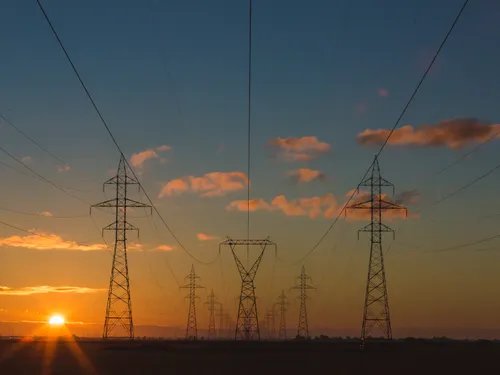
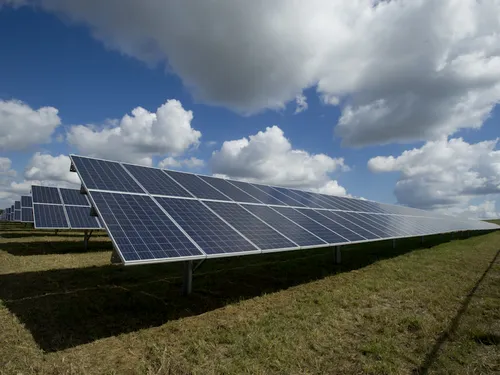
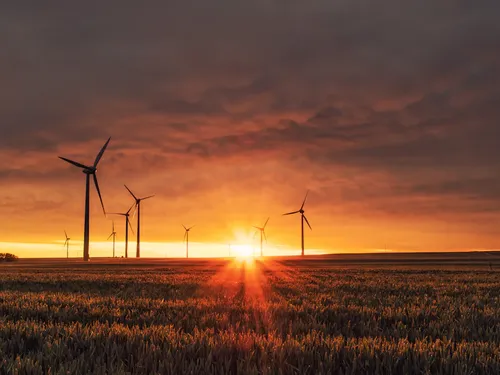
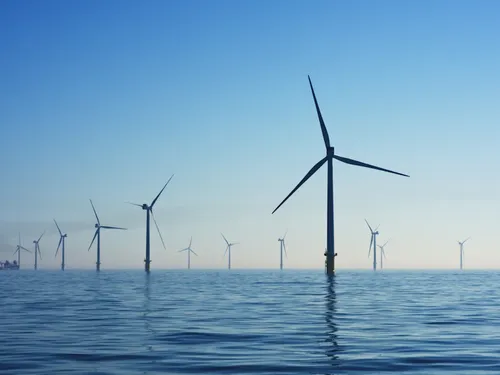
Our tip: In the energy sector, pilot plants and demonstration projects are also frequently eligible, provided they serve to validate novel technologies under real conditions. Software developments for plant control, grid modelling or energy management can likewise be independently eligible. In a complimentary initial consultation, we analyse your entire R&D portfolio.
Frequently Asked Questions
Further Resources on the R&D Tax Credit
Deepen your knowledge with our specialized resources:



Energy Transition & R&D Funding
Germany's climate neutrality target by 2045 drives innovation in the energy sector – with substantial funding potential through the Forschungszulage.
Renewable Energy Technologies
Research on perovskite tandem solar cells, floating offshore wind turbines, or geothermal deep drilling methods. The technical uncertainty in scaling new photovoltaic materials is an ideal FZulG use case.
Grid Optimization & Smart Grids
Developing AI-based load forecasting models, virtual power plants, and real-time grid stabilization algorithms. Integrating volatile renewable energy into the power grid presents operators with technical challenges that carry high funding potential.
Hydrogen Technology
Research on efficient electrolysis methods (PEM, AEL, SOEC), hydrogen storage technologies, and fuel cell development. Germany's National Hydrogen Strategy underscores the political tailwind – the Forschungszulage complements project-specific funding programs.
Energy Storage & Battery Systems
Research on redox flow batteries, compressed air storage, or thermal storage systems. Developing battery management systems for grid-scale applications is a growing funding area with considerable technical uncertainty.
Market development: The German energy industry invested over €12 billion in R&D in 2024 (BDEW). Unlike project-specific funding programs (e.g., IPCEI Hydrogen), the Forschungszulage is technology-neutral and can even be applied retroactively for ongoing development projects.