R&D Tax Credit for Pharma &
Life Sciences
Pharma and biotech companies are among the most R&D-intensive industries. Those developing new active ingredients, bioprocesses, or analytical methods can reclaim up to 25% of staff costs in tax credits – regardless of approval status.
- •Pharma companies can reclaim up to 25% of their R&D costs via the R&D tax credit.
- •Eligible: drug screening, formulation development, preclinical studies, analytical method development.
- •70% of CRO contract research costs within the EEA are creditable as eligible expenditure.
- •Maximum assessment base: €12 million per fiscal year (up to €4.2 million reimbursement for SMEs).
Special Aspects of Pharma Funding
The pharmaceutical industry is characterised by particularly high R&D intensity: German pharmaceutical companies invest an average of 13.1% of their revenue in research and development (vfa, 2024). The R&D tax credit offers a significant liquidity advantage here – regardless of whether a project achieves approval.
Crucial for pharma: The BSFZ does not assess approval success, but whether technical uncertainties were systematically addressed. Even failed drug candidates, abandoned formulation developments, or negative study results are eligible – provided the research approach meets the Frascati criteria.
A particular advantage: Contract research to CROs within the European Economic Area is creditable at 70% of costs. For typical CRO commissions of €500,000–2 million, this alone yields reimbursements of €87,500–350,000 per year.
What is funded in Pharma &
Life Sciences?
These project types are typically eligible under FZulG §2 – provided technical uncertainty existed and the goal was not achievable with standard methods.
Active Ingredient Development & Drug Discovery
Development and optimisation of new drug candidates, novel synthesis routes, or innovative formulation concepts in the preclinical phase.
Bioprocess Development & Scale-Up
Development and optimisation of biotechnological manufacturing processes, from fermentation and purification through to scale-up.
Analytical Methods & Quality Control
Development of new analytical methods, characterisation procedures, or in-process controls that go beyond the current state of the art.
FZulG Criteria for
Pharma Projects
The active ingredient, bioprocess, or method goes beyond the current state of scientific knowledge.
Success was uncertain at the outset – screening, iterations, and failed attempts document this.
Lab notebooks, SOPs, experimental plans, and scientific reports demonstrate the structured methodology.
Routine analytics and GMP production without a development character are not eligible.
Even preclinical research without an approval objective is eligible. No patent or market authorisation is required – only the R&D character matters.
Eligible roles include: research chemists, biologists, process engineers and CRO contract research (70% of remuneration).
Typical funding per pharma project: €80,000 – 300,000 / year
Internal estimate: €180,000. NOVARIS identified additional eligible lab costs and contract research.
8+ projects managed, 100% approval rate. Not a single application rejected.
Without vs. with NOVARIS — typical difference
Illustrative example based on average client results. Actual results may vary.
Industry-Specific Requirements in the Pharmaceutical Sector
Pharmaceutical companies have an excellent starting point for the R&D tax credit thanks to their GxP documentation obligations (GLP, GMP, GCP). Laboratory journals, batch records, validation reports, and stability studies according to ICH guidelines Q1–Q12 document systematic experimental work – precisely what the BSFZ requires as evidence of R&D activity. The art lies in extracting the R&D-relevant components from the extensive regulatory documentation and presenting them in a structured manner.
The distinction between preclinical and clinical phases has a direct impact on eligibility. Preclinical studies (in-vitro assays, animal models, ADME studies, toxicological investigations) are regularly eligible, as they are experimental by definition. In clinical phases I–III, the scientific planning, biostatistical evaluation, and development of analytical methods are particularly eligible. Phase IV studies may be eligible provided they go beyond mere market observation and investigate new scientific questions.
The development of active pharmaceutical ingredients (APIs) and innovative dosage forms offers significant funding potential. Synthesis optimisation, formulation development, process upscaling from laboratory to production scale, and the development of analytical methods (HPLC, mass spectrometry, dissolution testing) are typical eligible activities. Biosimilar development, although the reference product is known, also requires independent R&D to produce comparable quality attributes.
Regulatory submissions (CTD dossiers, approval applications to BfArM or EMA) contain extensive scientific treatises. Modules 2.4 (Nonclinical Overview), 2.5 (Clinical Overview), 2.6 (Nonclinical Written and Tabulated Summaries), and 2.7 (Clinical Summary) of the CTD are frequently prepared by scientists whose working time is proportionally eligible. Our specialised consultants understand the interfaces between Regulatory Affairs and R&D, thereby maximising the eligible assessment base.
Typical Funding Amounts in the Pharmaceutical Sector
Calculation example: Biopharma SME with drug pipeline
- • 15 scientists in synthesis, analytics, and formulation (gross salary: €1,200,000)
- • R&D share (approx. 75%): €900,000
- • Contract research (CRO for preclinical studies): €300,000 (70% = €210,000)
- • Maximum assessment base utilised: €1,000,000
- • R&D tax credit: €250,000 / year
Calculation example: Generics manufacturer with formulation development
- • 4 formulation scientists and 2 analysts (gross salary: €480,000)
- • R&D share formulation development (approx. 50%): €240,000
- • Annual R&D tax credit: €60,000
Eligible R&D Projects in the Pharmaceutical Sector
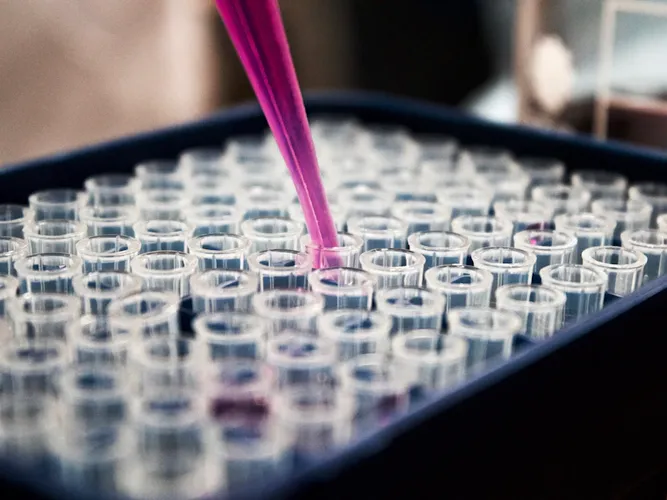
The pharmaceutical industry invests the highest share of revenue in R&D across all sectors – and this is precisely where the R&D tax credit applies. From early drug discovery through formulation development to process validation, numerous eligible project types exist, which we illustrate below with concrete examples.

Our tip: In the pharmaceutical industry, process development work that appears to be pure production at first glance is often eligible – for example, researching new granulation processes, developing PAT-based real-time release testing methods, or scale-up research for novel dosage forms. Our pharma-experienced consultants regularly identify additional R&D components in GMP-adjacent areas.
Frequently Asked Questions
Further Resources on the R&D Tax Credit
Deepen your knowledge with our specialized resources:



Regulatory Specifics in Pharma R&D
The intersection of clinical research, GMP processes, and the Forschungszulage holds significant, often untapped funding potential.
Phase I–III: Clinical Trials
Clinical trials in Phases I through III generally qualify as experimental development under the FZulG. Eligible costs extend beyond drug research itself to include developing innovative study designs, adaptive dosing algorithms, and novel biomarker-based endpoints. Phase IV studies (post-marketing) are typically not eligible.
GMP Process Development
Developing new manufacturing processes under GMP (Good Manufacturing Practice) conditions is frequently eligible – particularly when scale-up processes involve technical uncertainties. This includes continuous manufacturing methods, novel formulation technologies, or developing PAT systems (Process Analytical Technology).
Regulatory Affairs & CMC
Regulatory affairs activities can also be eligible, provided they go beyond mere documentation. Developing innovative CMC strategies (Chemistry, Manufacturing and Controls), real-world evidence concepts, or novel dossier formats for accelerated approval pathways often exhibit the required technical novelty.
From practice: With our pharmaceutical clients, we typically identify 30–40% more eligible activities than originally assumed – particularly in process development and analytical method validations that are frequently misclassified as “routine.”